Features
What St. John's and Whitehorse offer writers that larger Canadian cities do not
Writing retreats St. John's Whitehorse trade big-city noise for named residencies, northern light, real isolation and lower off-season costs.
What to take away
- Writing retreats St. John's Whitehorse work best for manuscripts that need weather, quiet and a small arts community rather than a big-city writing scene.
- St. John's offers named residencies such as the Harlow and the Cox & Palmer Creative Writing Residency, plus Newfoundland and Labrador arts funding through ArtsNL.
- Yukon residencies are in Dawson City; Whitehorse has studio placements, the Ted Harrison Artist Retreat Society, northern light and genuine isolation.
- Both cities cost less than Toronto for accommodation and food, but airfare is higher and connections are fewer.
- Larger Canadian cities cannot give you a February storm, a dark winter sky or a residency cohort of four.
- Match the project to the placememoir and family history to St. John's, nature and long-form to Whitehorse.
Why St. John's and Whitehorse suit writers differently
A writing retreat works when the place changes what you can write. St. John's and Whitehorse change it in opposite directions.
St. John's is a small city on a rock in the North Atlantic. It has a university, a theatre scene, pubs with live music and a writing community that knows each other by name. The weather is the point: fog, rain, wind and snow arrive without negotiation.
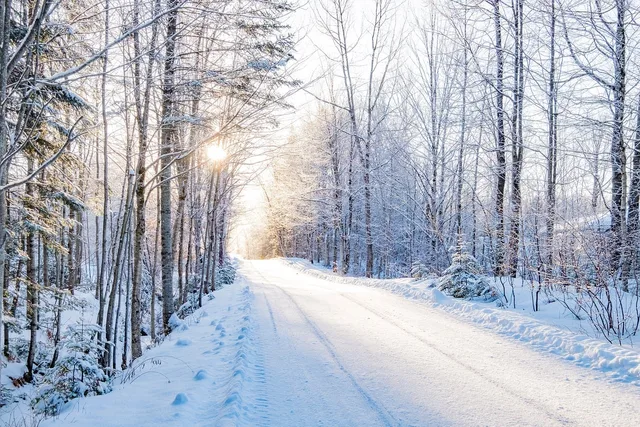
Whitehorse is smaller and further north. It has a territorial government, a handful of galleries and a wilderness that starts at the edge of town. In winter the light is short and low. In summer it does not really leave.
Neither city offers the volume of workshops, readings and publishing events you find in Toronto or Montreal. That is the trade.
For writers who need an audience every week, both cities will feel thin. For writers who need a manuscript finished, both cities remove the reasons not to finish it.
St. John's: named residencies, weather and the writing season
Named residencies in St. John's
The Harlow is a residency run by the Writers' Alliance of Newfoundland and Labrador. It gives a writer time and space in St. John's, with the local writing community nearby. Typical terms are two to four weeks, with housing and a stipend in the low thousands of dollars.
The Cox & Palmer Creative Writing Residency is another named opportunity in the city, supported through the provincial arts system. Typical terms match the Harlow: two to four weeks, housing and a small stipend. Application windows and exact amounts are set each cycle. Both are competitive and both expect a project, not a holiday.
Memorial University also hosts writers through its English department and affiliated programs. These are not full residencies in every case, but they put you in the same rooms as Newfoundland writers.
Funding context in Newfoundland and Labrador
ArtsNL, the Newfoundland and Labrador Arts Council, runs the main provincial streams for writers. These include project grants, creation grants and a professional artists' travel fund.
The provincial arts programs are the place to start before you apply to a residency, because some residencies expect you to have your own funding in place.
Canada Council for the Arts also funds Newfoundland writers, and the Writers' Alliance is the professional body to join if you want local news about deadlines.
Weather and the writing season
St. John's winter runs from November into April. Snow, rain and wind can all appear in the same week. This is not a hardship for every writer, but it is a fact you plan around.
Summer is short and busy with tourists. June to August brings the best weather and the highest prices. If you want quiet and lower rent, off-season suits a writing retreat stay far better than July.
Spring and autumn are the compromise: fewer visitors, workable weather, and a city that has returned to its normal rhythm.
What a St. John's day looks like
- Write from early morning until the fog lifts or the light changes.
- Walk the harbour or Signal Hill to reset your head.
- Work again in the afternoon, then eat fish and chips somewhere on Water Street.
- Read in a pub or a cafe, or go to a reading if one is on.
That rhythm holds for weeks. It is the reason writers come back.
Whitehorse: northern light, isolation and residency access
Residencies in Yukon and studio space in Whitehorse
Yukon's residency programs are in Dawson City. The Yukon School of Visual Arts runs residencies and intensive programs that draw artists from across Canada. Whitehorse has no full residency of its own. In Whitehorse, the Ted Harrison Artist Retreat Society offers retreat space.
The Yukon Arts Centre and the territory's artist-run centres also host short residencies and studio placements. These are small programs. Apply early and read the eligibility rules carefully.
Northern light and isolation
Whitehorse sits at roughly 60 degrees north. In December the daylight is brief and the sun stays low. In June it barely sets. Writers who work at night in summer find the light confusing at first and useful later.
The aurora is visible on clear nights through the darker months. That is a real working condition, not a postcard: it changes when you sleep and when you write.
Isolation is the other condition. Whitehorse has about 30,000 people and the next city of any size is a long drive or a flight away. For a writer who needs to disappear into a draft, this is the advantage.
Parks Canada manages national parks and historic sites across the territory, and writer access to those settings is arranged through Parks Canada locations and local offices. Some residencies build site visits into the program.
Yukon funding and support
The Yukon government's Arts Fund and the Advanced Artist Award are the two territorial streams most writers use. The Yukon Arts Centre and local artist-run centres are the practical route to advice on deadlines and eligibility.
A Whitehorse checklist
- Confirm the residency dates and whether housing is included.
- Check daylight hours for your month, not the average.
- Budget for flights through Vancouver, Calgary or Edmonton.
- Ask about winter gear and whether the residency provides it.
- Set up a satellite or offline writing system before you go.
- Tell someone at home your check-in schedule.
- Read the funding deadlines before you book anything.
Cost and travel realities in both cities
Neither city is cheap to reach. Both are cheaper to live in than Toronto or Vancouver once you arrive.
St. John's
- Return flight from Toronto
- Roughly $500 to $900
- Monthly rent, one bedroom
- Typical range $900 to $1,300
- Groceries, one person
- Typical range $500 to $700
- Off-season accommodation
- Cheapest in winter
Whitehorse
- Return flight from Toronto
- Roughly $700 to $1,200
- Monthly rent, one bedroom
- Typical range $1,300 to $1,800
- Groceries, one person
- Typical range $600 to $800
- Off-season accommodation
- Cheapest in winter
Toronto comparison
- Return flight from Toronto
- n/a
- Monthly rent, one bedroom
- Typical range $1,900 to $2,600
- Groceries, one person
- Typical range $400 to $550
- Off-season accommodation
- Little seasonal swing
The rent and grocery ranges are typical, not quoted local rates.
Flights to St. John's usually connect through Toronto, Montreal or Halifax. Flights to Whitehorse usually connect through Vancouver, Calgary or Edmonton. Both routes add a day of travel at each end.
Statistics Canada publishes regional population, income and housing data through the national census, which is the honest way to compare costs across these three places rather than trusting a blog.
For a fuller picture of what a trip actually runs, see self-made costs compared with organized programs. The gap is usually accommodation and food, not the flight. If you are budgeting from scratch, writing retreat costs worth your time breaks the categories down.
The large-city trade-off: access for attention
Toronto, Montreal and Vancouver have the publishers, the readings, the workshops and the largest writing communities in the country. They also have rent, noise, commuting and a social calendar that eats evenings.
A residency in a large city often means a room in a building where everyone else is also busy. A residency in St. John's or Whitehorse means the cohort is small and the surroundings are not competing for your attention.
Weather is a genuine writing tool. A week of rain in St. John's or a month of low winter light in Whitehorse gives a manuscript a texture that a temperate city cannot supply. If your book is set in a place like that, the research is free.
Isolation also removes the option of quitting early. When the flight home is expensive and the next one is days away, you stay and you work. That constraint is worth more than another workshop.
What the big cities offer is access. If your project needs an agent meeting, a press contact or a reading series, stay where they are. If it needs 60,000 words, go north or go east.
Matching a project to one of the two cities
Choose St. John's if your project involves family history, fishing or mining communities, migration, the Atlantic, or a voice that depends on Irish and English Newfoundland speech. The city's archives, university and theatre scene support that work.
Choose Whitehorse if your project involves wilderness, distance, northern life, Indigenous history in the territory, or a narrator alone with the land. The scale of the place does half the work.
Consider the season against the draft. A first draft needs volume, so take the long dark evenings. A revision needs distance from the material, so take the bright summer and walk.
Before you commit, set a target you can actually hold for the weeks you are there. A residency without a word target becomes a long holiday with a desk.
Pack for the climate, not the fantasy. A packing list built around protecting the manuscript covers waterproofing, backups and the cold-weather layers both cities demand.
Apply to more than one program. Both cities have small residency pools and rejection is normal. The funding application and the residency application are separate jobs, and both take weeks.