Features
Bilingual and Indigenous-led residencies in Canada, language and cultural protocols
Indigenous residencies Canada: named programmes, French-language options, cultural protocols, privacy rules and the questions to ask before you apply.
What to take away
- Indigenous residencies Canada offers range from land-based programmes run by First Nations organizations to francophone studio residencies funded through Quebec.
- Invitation and relationship usually matter more than a competition entry, especially at the named centres below.
- Reciprocity is negotiated up fronta workshop, a donated work, an archive recording.
- French-language residencies cluster in Quebec, with francophone centres in Manitoba and Ontario serving minority-language artists.
- If a residency documents community work, PIPEDA, Quebec's Law 25 and the OCAP principles all apply.
- Ask about eligibility, fees, accommodation, translation and image rights before you send anything.
What respectful participation in an Indigenous-led residency requires
Respectful participation starts with accepting that you are a guest. The community sets the terms, the pace and the boundaries. Learn them before you arrive, not after.
Many Indigenous-led residencies in Canada do not run open calls at all. Hosts invite artists, or take artists introduced by someone the community already trusts. A cold application can work. A relationship works faster.
The federal Indigenous Peoples portal is a reasonable first stop for the programmes, services and governance context that shape these residencies. It covers far more than arts funding, which is the point: Indigenous Peoples - Canada.ca.
Territory acknowledgements in Canada name specific nations, not a general idea of Indigeneity. A Vancouver host names the Musqueam, Squamish and Tsleil-Waututh. A Calgary host names Treaty 7 and the Métis Nation of Alberta. A Regina host names Treaty 4. Find out which one applies before you speak at the opening circle.
In many Cree, Ojibwe and Haudenosaunee communities, asking an Elder for time or knowledge begins with an offering of tobacco, and sometimes cloth. Bring it with you. If you are unsure how to approach someone, ask your host to make the introduction.
Elders and knowledge keepers are often involved in residencies, sometimes paid and sometimes not. CARFAC, the Canadian Artists' Representation, publishes recommended fee schedules for talks, exhibitions and residencies. Treat those as the floor when you negotiate an honorarium.
Language matters too. If the community's first language is not English or French, learn the greeting, the territory acknowledgement and the names of the people hosting you. A few words used correctly carry more weight than a long apology.
Before you commit, treat the host conversation like any other professional negotiation. The instincts that guide first studio visit etiquette apply here: ask what is expected, what is shared, and what stays private.
French-language residency programmes and where they run
French-language artist residencies in Canada cluster in Quebec. The Ministère de la Culture et des Communications du Québec funds the Conseil des arts et des lettres du Québec, which administers residency grants and studio exchanges, and it backs the province's network of artist-run centres through the RCAAQ.
That funding is why small towns host residencies of national standing: Culture | Gouvernement du Québec.
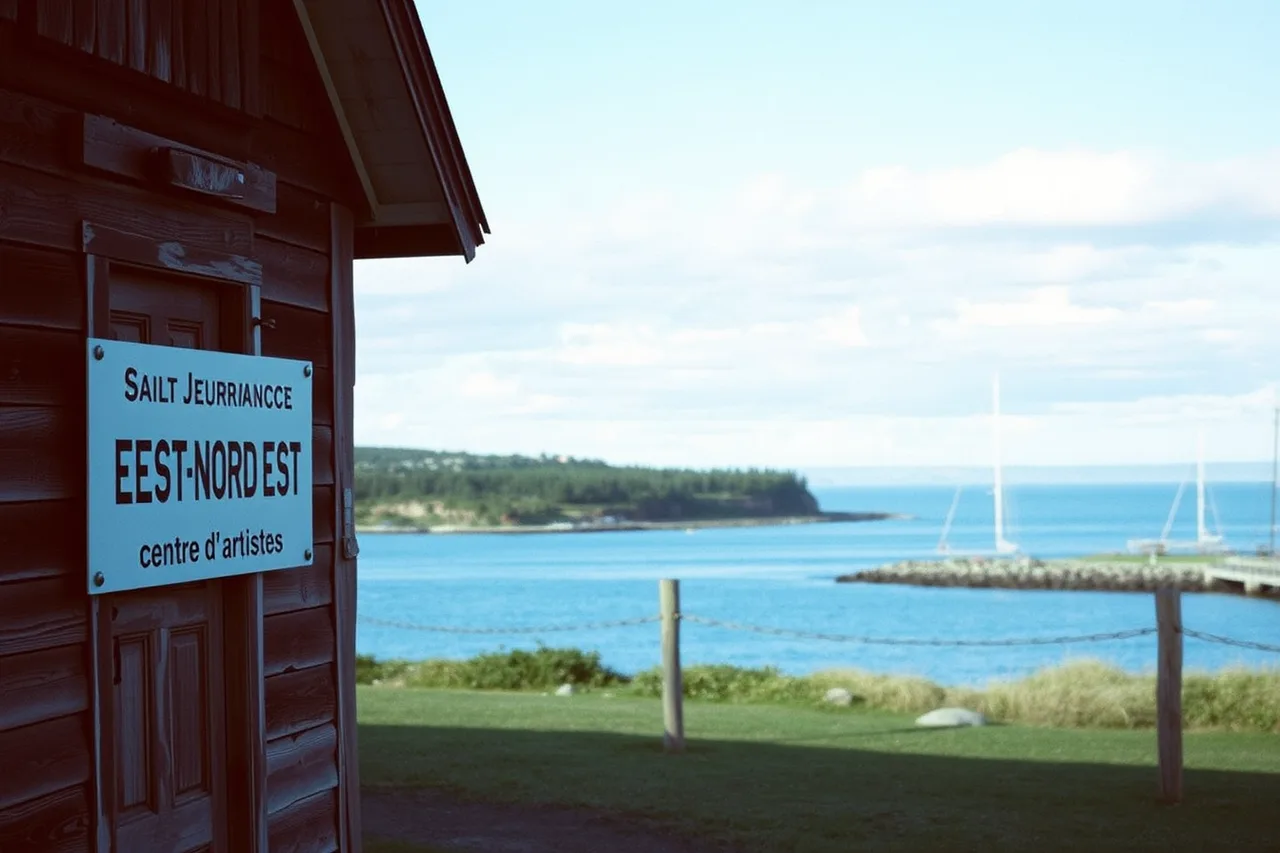
Est-Nord-Est, centre d'artistes, in Saint-Jean-Port-Joli on the south shore of the St. Lawrence, is the best-known example. It runs scheduled residency sessions for professional artists working in visual arts, craft, literature and curating, and each cohort is chosen by jury. Applications, studio critiques and daily life happen in French.
La Maison des artistes visuels francophones in Winnipeg's Saint-Boniface quarter serves artists in a minority-language setting. It offers studios, exhibitions and residencies, and it is a useful model for anyone wanting francophone programming outside Quebec.
Other Quebec centres with residency streams include Centre Sagamie in Alma, Atelier de l'Île in Val-David and Le 3e impérial in Granby. Each has its own jury, deadlines and expectations about how much French you need.
Bilingual residency programmes often describe themselves as bilingual when only the application form is. Check whether the critiques, the studio conversations and the public presentation happen in the language you work in.
Cost is the other variable. A residency that looks free may carry a materials fee, a cleaning deposit or a requirement to contribute to an exhibition. Compare the full number, not the headline, the way you would when weighing culture, level and money at a workshop destination.
Indigenous cultural protocols: invitation, reciprocity and community consent
Invitation is the first protocol. Artists at Aanmitaagzi on Nipissing First Nation and at Debajehmujig on Manitoulin Island generally arrive through a relationship with the community or through a partner organization rather than a public portal.
Reciprocity is the second. Mi'kmaq communities describe the underlying principle as Netukulimk, taking only what is needed and leaving enough for others. In practice, reciprocity at a residency might be a printmaking workshop for local youth, a finished work for the band office, or a recording handed to the community archive.
Community consent is the third, and it is ongoing. Consent given in week one does not cover week six. If your project changes shape, the people affected need to know and agree.
Indigenous data governance has a named standard in Canada. The First Nations Information Governance Centre sets out the OCAP principles: ownership, control, access and possession. Artists and researchers working with First Nations data are expected to work inside them.
Written protocols exist in some places and not others. Several self-governing First Nations in Yukon, including the Champagne and Aishihik First Nations, maintain heritage departments with their own terms for recording and publishing stories. Where no policy exists, the absence is not permission to improvise. Ask what has worked before and follow that precedent.
If your residency involves selling work made during the stay, check how the community wants that handled. Saskatchewan publishes supports for First Nations, Métis and northern community businesses: First Nations, Métis and Northern Community Businesses | Information for Saskatchewan Businesses and Industry | Government of Saskatchewan.
Named Indigenous-led residencies and the communities behind them
These are led by Indigenous organizations, not by settler institutions with an advisory panel. Territory matters as much as the postcode.
Named Indigenous-led residencies
| Programme | Home | Lead and territory |
|---|---|---|
| Banff Centre Indigenous Arts | Banff, Alberta | Indigenous Arts department on Treaty 7 territory |
| Debajehmujig Storytellers | Manitowaning, Ontario | Anishinaabe-led, Robinson-Huron Treaty, Manitoulin Island |
| Sâkêwêwak First Nations Artists' Collective | Regina, Saskatchewan | Indigenous artist-run centre, Treaty 4 and Métis homeland |
| Aanmitaagzi | Nipissing First Nation, Ontario | Anishinaabe-led, Winter Stories residency series |
| Qaggiavuut | Iqaluit, Nunavut | Inuit-led performing arts society, residencies and summits |
| Kwanlin Dün Cultural Centre | Whitehorse, Yukon | Kwanlin Dün First Nation, residency and cultural programming |
Debajehmujig Storytellers has run its Creation Centre in Manitowaning on Manitoulin Island for decades. It hosts artists, mounts new work and tours productions to communities across the region. Programming follows the Anishinaabe seasonal calendar rather than the academic one.
Sâkêwêwak First Nations Artists' Collective in Regina is an Indigenous-run artist centre on Treaty 4 territory and the homeland of the Métis. It supports residencies, exhibitions and the Storytellers Festival, and it works with artists from across the Prairies.
Qaggiavuut in Iqaluit is an Inuit performing arts society that trains, employs and hosts Inuit artists at home in Nunavut. Its residencies and arts summits keep work in the territory instead of flying artists south.
The Banff Centre for Arts and Creativity runs Indigenous Arts programmes on Treaty 7 territory in the Bow Valley. The Centre sits inside Banff National Park, administered by Parks Canada, so wildlife rules shape daily life.
Money comes from several places. The Canada Council for the Arts runs Creating, Knowing and Sharing: The Arts and Cultures of First Nations, Inuit and Métis Peoples. The Alberta Foundation for the Arts and the Ontario Arts Council both fund Indigenous-led arts activity in their provinces.
The CRA treats grant income and self-employment income differently, so keep records from day one.
For a sense of how these stays play out for artists, case studies beat brochures, especially when read alongside our guide to artist residency grants canada.
Language, translation and accessibility in bilingual programmes
Bilingual programming usually means one of three things: two separate streams, one stream with interpretation, or an English programme with a French application form. Ask which one you are applying to.
At the Canada Council for the Arts, applications may be submitted in either official language. That right does not extend to every host, so confirm what happens after the jury stage.
Interpretation costs money and time. A residency that offers simultaneous interpretation for public events is investing in access. One that prints a bilingual brochure is not doing the same thing.
Accessibility covers more than language. Northern residencies sit far from specialist care. Iqaluit has Qikiqtani General Hospital and medevac links to Ottawa or Winnipeg. Dawson City is roughly five hours by road from Whitehorse General Hospital in good weather.
Ask about step-free access, dietary needs and internet reliability. For Deaf and disabled artists, the useful question is what has actually worked for previous residents. Ask for a specific example.
What happens when something goes wrong often depends on local ties. A host who knows the band office, the clinic and the nearest mechanic is worth more than a glossy brochure.
Data, images and privacy when a residency documents community work
Documentation is where goodwill is most easily lost. Photographs of people, recordings of stories and notes from community meetings are personal information in most Canadian contexts, and they carry legal weight.
The federal framework is set out by the Office of the Privacy Commissioner of Canada, and it applies differently to public bodies, private organizations and commercial activity: Privacy laws in Canada - Office of the Privacy Commissioner of Canada.
The details vary by province. Quebec's Law 25 tightened consent rules and added privacy officer duties for organizations. British Columbia and Alberta each have their own private-sector statutes. If your residency crosses a provincial border, the strictest rule usually wins in practice.
Community rules can be stricter than the law. The OCAP principles give First Nations control over data about their members. The Tri-Council Policy Statement, Chapter 9, sets expectations for research with First Nations, Inuit and Métis peoples, including community engagement before collection begins.
Picture a beading workshop at a friendship centre in Prince Albert. You photograph three participants for a grant report. That consent covers the report only. It does not cover a gallery show, your website or a later book. Ask for each use separately, and write down the answer.
Store files where the host can reach them. Do not leave recordings on a shared drive that nobody can audit. Agree in writing, before you leave, about what happens to the material afterwards.
If a band office or cultural centre asks you to delete recordings, delete them and confirm in writing. Some communities also ask visiting artists to sign a heritage or research agreement before recording starts, and that agreement may outlast your residency.
Questions to ask a host before applying
Send this as one email rather than five.
- Is this residency open-call, by invitation, or through an existing relationship with the community?
- What does the fee cover, and what extra costs should I expect for travel, materials, food and housing?
- Who owns the work made during the residency, and what rights does the host retain?
- What language will the studio, critiques, events and daily life happen in?
- What are the community's protocols for photography, recording, ceremony and sharing knowledge?
- What does reciprocity look like here, and what have past residents given back?
- How is my personal and project data stored, and who can access it after I leave?
Work through the money questions as carefully as the cultural ones. Most residency disputes trace back to unclear expectations about eligibility, fees and responsibility, not to artistic differences.
A worked example
Suppose you are offered a six-week residency in Dawson City in February. Before accepting, confirm the real stipend after tax and whether the studio is heated overnight. Then ask how you get groceries, what happens if a flight is cancelled, and whether the community wants a public talk.
Finally, settle who reviews any images you post. Most of those questions have nothing to do with art.