Costs
Artist residency grants in Canada: funders and real costs
Artist residency grants in Canada come from the Canada Council and provincial arts councils; here is who funds residencies and what they leave you to pay.
Artist residency grants in Canada come from public arts councils, and each council publishes its own program guide.
What to take away
- Canada Council for the Arts is the largest funder, and its project and travel grants do not require a dealer or a gallery history.
- Provincial arts councils fund residencies on their own deadlines, so a single year can hold two or three applications.
- Applications are usually free. The residency is not, and the gap you must fill often runs from about $500 to $10,000.
- Put the grant and the residency in separate budgets, and say which line each one pays for.
The short answer
Grant money and residency costs are separate budgets. A funder assesses the first. You carry the second. Apply to the council whose mandate matches your medium, then build the numbers around what the host does not cover.
Canada Council for the Arts is where most artists begin. Explore and Create funds research and creation, and peer assessment weighs the work and the plan rather than a list of galleries. Travel grants sit inside the same system and cover part of the cost of reaching a residency outside Canada.
Checking eligibility, fees and responsibility before you submit saves a wasted fee.
Provincial councils do as much of the work. Ontario Arts Council, BC Arts Council, the Conseil des arts et des lettres du Quebec, and SK Arts all run residency-friendly programs. Municipal councils in the larger cities add smaller awards, and deadlines are staggered across the year.
What the entry actually covers
Ask the host three questions before you price anything. Does the fee include studio, accommodation and meals? Is there a stipend, and when is it paid? What does the host expect you to leave behind?
Ask the host before pricing
- Studio, accommodation and meals in writing
- Stipend amount and payment date
- Public outcome required, such as talk
- What host does not covertravel
- What host does not covermaterials
- What host does not coverinsurance
Some residencies charge nothing and pay a stipend. Others charge several thousand dollars and hand over a bed and a bench. One word hides both arrangements, and the power, permissions and expenses you bring along are always your own line.
Transport, honestly
Domestic return flight costs
- $250Inside Canada
- $900Northern and island destinations
Freight is the line artists underestimate. Clay, glass, large panels and lighting kit can cost more to ship than a seat on the plane. Ask the studio what it stocks before you crate anything.
If you drive, count fuel, parking and one overnight stop each way.
The costs people forget
| Annual line (CAD, one residency) | Low to high |
|---|---|
| Application and submission fees | $0 to $75 |
| Travel, domestic return | $250 to $1,400 |
| Freight for materials and equipment | $0 to $900 |
| Residency fee after any waiver | $0 to $2,500 |
| Materials and consumables on site | $200 to $1,500 |
| Insurance and contingency | $100 to $600 |
| Lost income, two to four weeks | $0 to $3,000 |
One residency can run from roughly $500 to $10,000 once every line is counted. A breakdown of creative retreat costs shows the same shape on a shorter trip. Insurance, documentation and unpaid leave are the three lines that appear last.
One residency, all lines counted
- $500Low end of one residency
- $10,000High end of one residency
- $3,000Lost income, two to four weeks
- $2,500Residency fee after any waiver
What changes the total most
Distance is the first driver. A residency two provinces away can add $600 or more in travel and freight before you buy a tube of paint.
Duration is the second. Every extra week adds food, materials and lost income, and lost income is usually the largest single number on the page.
The third is what the host provides. A fee waiver plus a stipend can cut thousands from the total. A fee with no stipend can double it.
Example budget for a two-week residency
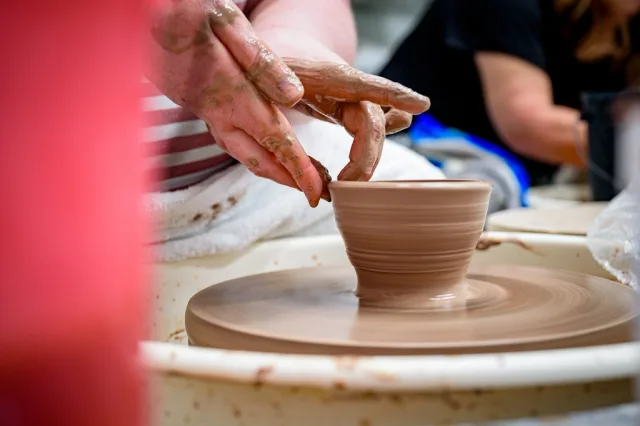
Take a ceramics residency in another province with a $15,000 project grant already awarded; flights cost $620 and freight for tools $340. The residency fee is $700, clay and glaze $480, insurance $180, and lost income $1,400.
Who pays what in the example
Grant covers
- Residency fee
- $700
- Clay and glaze
- $480
- Flights
- —
- Freight for tools
- —
- Insurance
- —
- Lost income
- —
You absorb
- Residency fee
- —
- Clay and glaze
- —
- Flights
- $620
- Freight for tools
- $340
- Insurance
- $180
- Lost income
- $1,400
The grant covers the fee and materials; you absorb the rest. If the fee turns out non-refundable, the list of fixes worth trying covers what artists change before they pay.